
With 36 years of distinguished service in the United States Army, former Lieutenant General Rohling has been at the forefront of transatlantic cooperation, strategic alliances, and crisis response across four continents. From the jungles of Panama to commanding elite forces in Iraq and Afghanistan to serving as Deputy Chair of the NATO Military Committee at the heart of NATO’s command structure, Lieutenant General Rohling has been engaged with global strategy and crisis response throughout his career. Just before the Christmas break, we sat down with Lieutenant General Rohling to discuss how today’s security environment is shaping business.
Decorated for his service (Distinguished Service Medal, the Legion of Merit, Medal for Valor, several Bronze Star’s) and renowned for his expertise in multinational operations, he brings unparalleled insight and collected thinking to the challenges and opportunities facing Europe and the world today.
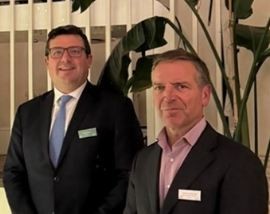
Simon Riley: Thank you for joining us. To begin, how would you characterise the current global security environment?
Andrew Rohling: We’re in an era of strategic competition. It’s not outright war, but it’s certainly not peaceful either. The global order is being tested daily, whether in Ukraine, Sudan, the Indo-Pacific, or the Arctic. These aren’t isolated events; they’re interconnected, and their effects ripple through markets, regulation, and investment.
Simon Riley: How do you see the relationship between security and markets?
Andrew Rohling: They’re deeply intertwined. Geopolitical risk drives regulation and sanctions, which in turn impact global investment and market capabilities. Infrastructure vulnerabilities, like those exposed in Ukraine, highlight the need for resilience, and that’s where markets and private investment can play a transformative role.
Ali French: What role does private investment play in innovation and security?
Andrew Rohling: Private investment is the real driver of innovation, especially in emerging technologies and dual-use capabilities. Governments are good at scaling solutions, but it’s the private sector that brings agility and technological advancement. That said, large-scale projects, like tanks or submarines, will always require government backing.
Ali French: How do you view the balance between hardware and software innovation in defence?
Andrew Rohling: It’s a challenge. There’s a lot of excitement around software, but in defence, hardware still matters. Software can be quickly replicated or bought out, so companies need to think about dual-use capabilities and resilience; solutions that are relevant in both wartime and peacetime.
Simon Riley: Let’s talk about Europe and NATO. What are the main challenges and opportunities?
Andrew Rohling: NATO decision-making is like getting 32 people to agree on lunch, consensus is hard, and only when the chef says the kitchen is closing do you get a decision. The UK, post-Brexit, sits between the US and EU, facing unique challenges in defence and industry. There’s a lot of debate... ...about spending, 5% versus 3.5% of GDP, but the real opportunity is in building resilience and strategic autonomy.
Ali French: How does media and public perception influence security and business?
Andrew Rohling: Media narratives shape public understanding, but distinguishing fact from opinion is increasingly difficult. Social media, misinformation, and AI-generated content erode trust. For business...
Andrew Rohling: ...this means greater risk and the need for robust information literacy.
Simon Riley: What lessons from military life are relevant for business leaders?
Andrew Rohling: Adaptation to stress, the importance of humour and camaraderie, and the ability to build resilience; these are all transferable. In both military and business, you need to understand the real motives behind actions, align diverse stakeholders, and be ready to adapt to adversity.
Ali French: Finally, what’s your outlook for business leaders navigating this environment?
Andrew Rohling: Global security is not a spectator sport. Business leaders must engage, invest, and adapt. The intersection of security and commerce will define the next decade, and those who understand and act on these dynamics will shape not just their own success, but the resilience of the global order.